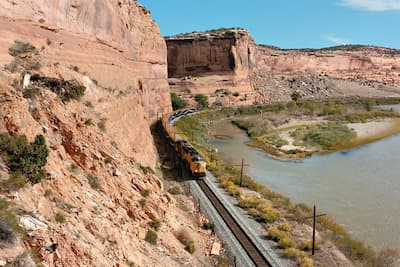

Moab is situated in eastern Utah, U.S.A., on the Colorado Plateau just south of the Colorado River, about 18 miles (29km) west of the Colorado state line, at an elevation of 4,026 feet (1,227m). Surrounded by towering red sandstone cliffs and the snow-capped La Sal Mountains, this small desert town is the gateway to two of America's most spectacular national parks, Arches and Canyonlands.
The town takes its name from the biblical land of Moab, east of the Jordan River. Latter-day Saint settlers first tried to establish a trading fort at the Colorado River crossing here in 1855, the Elk Mountain Mission, but it was abandoned within months after conflicts with the local Ute people. Farmers and ranchers later settled the valley for good, and in the 1950s geologist Charlie Steen's rich uranium strike south of town sparked a boom that more than tripled the population and earned Moab the nickname "Uranium Capital of the World".
Tourism took over when Canyonlands became a national park in 1964 and Arches followed in 1971. The entrance to Arches National Park, home to more than 2,000 natural stone arches including the famous Delicate Arch, is just north of town on Highway 191. To the southwest, Dead Horse Point State Park and the Island in the Sky district of Canyonlands offer breathtaking views over the canyons carved by the Colorado and Green Rivers.
Moab is also one of the best known outdoor adventure towns in the West. Visitors come for whitewater rafting and jet boat trips on the Colorado River, four-wheel drive tours, scenic flights, and world famous mountain biking trails such as the Slickrock Trail. Back in town, Main Street is lined with restaurants, cafes, galleries and outfitters.
The Canyon Spirit luxury train brings you to the doorstep of these national parks. Moab is where the two-day journey from Denver starts or ends, and the overnight stop on the three-day journey to or from Salt Lake City, making it a compulsory part of your Canyon Spirit rail vacation itinerary.
Averages are based on NOAA 1991–2020 climate normals for the Moab weather station. Precipitation includes rain and melted snow. Spring and autumn are the most comfortable seasons for exploring the parks; summer days are hot and dry, so start hikes early and carry plenty of water.